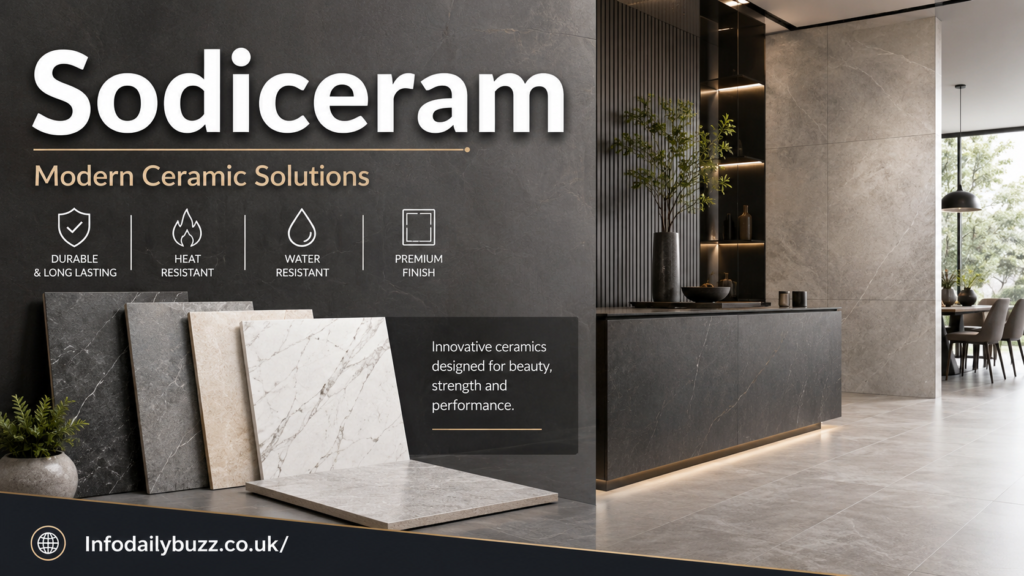

Sodiceram is emerging as one of the most discussed innovations in the field of advanced ceramic materials. In simple terms, it refers to a specialized category of ceramics enhanced with sodium-based compounds, designed to improve strength, durability, and performance across multiple industries. As modern industries demand more efficient and sustainable materials, Sodiceram has started gaining attention for its unique structure and functional advantages.
What makes Sodiceram particularly interesting is its ability to combine traditional ceramic properties with modern material engineering. Unlike conventional ceramics, it offers improved resistance to heat, pressure, and chemical exposure. This makes it highly valuable in construction, manufacturing, electronics, and design applications where reliability and long-term performance are essential.
What is Sodiceram
Sodiceram can be defined as an advanced engineered ceramic material that incorporates sodium compounds into its structure to enhance physical and chemical properties. It is not a single product but rather a category of high-performance ceramics designed for industrial and technical applications. The inclusion of sodium elements helps improve the material’s bonding and fluxing behavior during production.
At its core, Sodiceram is developed to overcome the limitations of traditional ceramics such as brittleness and limited thermal stability. By modifying the internal structure at a molecular level, manufacturers are able to create a more durable and adaptable material. This makes it suitable for environments where standard ceramics would fail or degrade over time.
History and Development of Sodiceram Technology
The development of Sodiceram is closely linked to the evolution of advanced ceramic science. Traditional ceramics have been used for thousands of years, but their limitations led researchers to explore modified compositions. Over time, the introduction of sodium-based compounds in ceramic processing opened new possibilities for stronger and more flexible materials.
Modern Sodiceram technology has evolved through continuous research in material science and industrial engineering. Laboratories and manufacturers began experimenting with different mineral blends, heat treatments, and chemical additives to improve performance. Today, Sodiceram represents a refined outcome of decades of innovation in ceramic engineering, especially in industries that require high-strength and heat-resistant materials.
Key Properties of Sodiceram
Sodiceram is known for its exceptional physical and chemical properties, which distinguish it from traditional ceramic materials. One of its most important characteristics is its high mechanical strength, allowing it to withstand heavy loads and pressure without breaking easily. This makes it suitable for demanding industrial applications.
Another important property is its thermal stability. Sodiceram can maintain its structure even under extreme temperatures, making it ideal for environments such as engines, furnaces, and electronic systems. In addition, it offers low porosity, which reduces moisture absorption and enhances chemical resistance, ensuring long-term durability in harsh conditions.
Manufacturing Process of Sodiceram
The production of Sodiceram involves carefully selected raw materials, including clay minerals, sodium compounds, and other reinforcing agents. These materials are blended in precise proportions to achieve the desired physical characteristics. The mixture is then shaped and prepared for high-temperature processing.
During firing, the material undergoes controlled heating in specialized kilns. This process triggers chemical reactions that strengthen the internal structure and enhance bonding between particles. After cooling, the final product is tested for quality, ensuring it meets industrial standards for strength, durability, and performance consistency.
Industrial Applications of Sodiceram
Sodiceram is widely used across multiple industries due to its versatility and strength. In the construction sector, it is used for creating durable tiles, panels, and architectural surfaces that can withstand environmental stress. Its aesthetic appeal also makes it popular in modern interior and exterior design.
In advanced industries such as electronics and automotive manufacturing, Sodiceram is used for components that require heat resistance and stability. It also plays a role in aerospace engineering, where lightweight yet strong materials are essential. These applications highlight its importance in modern technological development.
Benefits of Using Sodiceram
One of the biggest advantages of Sodiceram is its long-lasting durability. Products made from this material tend to have a significantly longer lifespan compared to traditional ceramics, reducing replacement and maintenance costs over time. This makes it a cost-effective solution for many industries.
Another key benefit is its energy-efficient production and performance. Because Sodiceram is engineered for strength and stability, it helps reduce material waste and energy consumption during usage. Additionally, its resistance to environmental factors contributes to sustainability, making it an attractive option for eco-conscious industries.
Challenges and Limitations of Sodiceram
Despite its advantages, Sodiceram is not without limitations. One of the main challenges is the complexity of its manufacturing process. Producing high-quality Sodiceram requires precise control over materials, temperature, and chemical composition, which can increase production costs.
Another limitation is its availability and scalability. Since it is still a developing material in some regions, large-scale production may not always be feasible. Additionally, certain specialized applications may still require further research to fully optimize its performance under extreme or unique conditions.
Sodiceram vs Traditional Ceramic Materials
When compared to traditional ceramics, Sodiceram offers several clear advantages. Conventional ceramics are often brittle and prone to cracking under pressure, whereas Sodiceram is engineered for improved strength and flexibility. This makes it more suitable for industrial and technical applications.
In terms of performance, Sodiceram also provides better resistance to heat, chemicals, and moisture. Traditional ceramics may degrade faster in harsh environments, but Sodiceram maintains stability over a longer period. This difference has made it increasingly popular in industries seeking high-performance materials.
Future of Sodiceram Technology
The future of Sodiceram looks promising as industries continue to demand advanced materials with superior performance. Researchers are actively working on improving its composition and expanding its applications in areas such as renewable energy, aerospace, and smart infrastructure. These developments could significantly increase its global importance.
Market trends also suggest growing interest in sustainable and efficient materials, which positions Sodiceram as a strong candidate for future adoption. As production techniques improve and costs decrease, it is expected that Sodiceram will become more widely available across different industries worldwide.
Environmental Impact and Market Trends
Sodiceram is also considered beneficial from an environmental perspective. Its durability reduces waste generation, and its production processes are becoming more energy-efficient over time. These factors contribute to lower environmental impact compared to many traditional manufacturing materials.
In terms of market trends, advanced ceramics like Sodiceram are experiencing increasing demand in both developed and emerging economies. Industries are investing heavily in research and development to explore new applications, making this material an important part of future industrial growth.
Conclusion
Sodiceram represents a significant step forward in the evolution of ceramic materials. By combining traditional ceramic foundations with modern engineering techniques, it delivers improved strength, durability, and versatility. Its growing role in various industries highlights its importance in shaping future material science innovations.
As research continues and technology advances, Sodiceram is expected to become even more efficient and widely used. Its balance of performance, sustainability, and adaptability makes it a valuable material for the future of industrial development.
FAQs about Sodiceram
What is Sodiceram used for?
Sodiceram is used in construction, electronics, automotive, and aerospace industries. It is valued for its strength, heat resistance, and long-lasting durability.
Is Sodiceram better than traditional ceramics?
Yes, in many cases Sodiceram performs better than traditional ceramics due to its enhanced strength, reduced brittleness, and improved thermal stability.
What industries benefit most from Sodiceram?
Industries such as construction, engineering, electronics, automotive, and aerospace benefit the most from Sodiceram due to its advanced material properties.
Is Sodiceram environmentally friendly?
Yes, Sodiceram is considered more environmentally friendly because it reduces waste, lasts longer, and supports energy-efficient manufacturing processes.
What is the future of Sodiceram?
The future of Sodiceram is promising, with increasing demand expected in high-tech industries, sustainable construction, and advanced engineering applications.