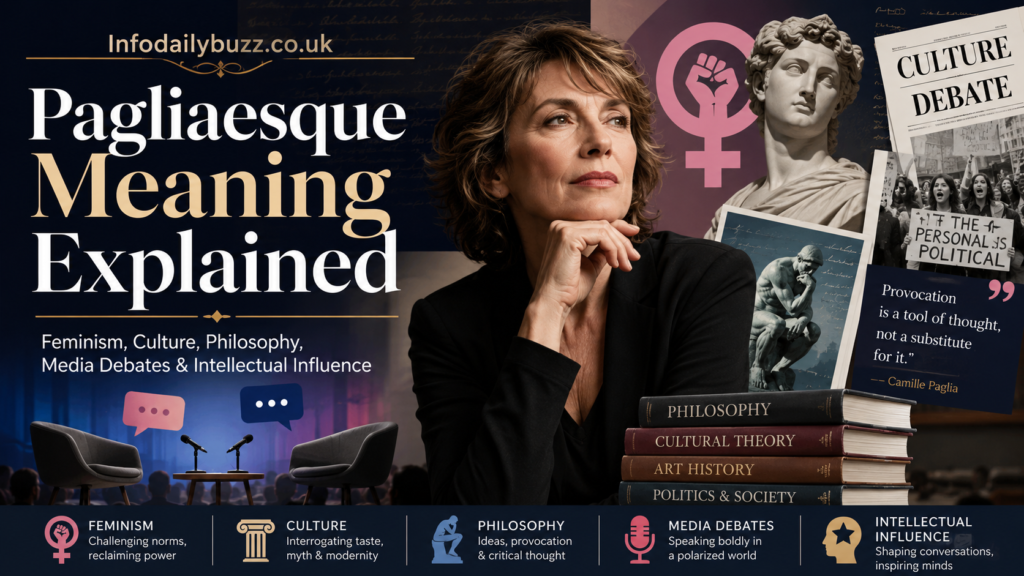

The word “Pagliaesque” has become increasingly visible in online discussions about culture, feminism, philosophy, and media criticism. It is a term connected to bold intellectual debate, fearless commentary, and unconventional thinking. In modern internet culture, where strong opinions often shape public conversations, Pagliaesque ideas continue to attract attention from readers, writers, academics, and podcast audiences.
Many people search for the meaning of Pagliaesque because they encounter the term in articles, debates, social media posts, or discussions about cultural criticism. The word is inspired by the style and ideas of cultural critic Camille Paglia, whose outspoken personality and provocative arguments helped shape modern intellectual discourse. Understanding Pagliaesque thinking offers insight into contemporary debates about identity, freedom, art, and society.
What Does Pagliaesque Mean?
Understanding the Definition of Pagliaesque
Pagliaesque refers to a style of thinking, writing, or cultural criticism associated with Camille Paglia. The term is often used to describe commentary that is intellectually bold, highly opinionated, and willing to challenge mainstream beliefs. A Pagliaesque argument usually combines deep cultural analysis with provocative observations about society, gender, media, and power.
The word has evolved beyond its academic roots and now appears in online discussions about politics, philosophy, feminism, and entertainment. People often use the term when describing a writer or speaker who combines sharp analysis with fearless criticism. In many ways, Pagliaesque has become shorthand for independent intellectual thinking that refuses to follow conventional narratives.
How the Word Became Popular Online
The rise of podcasts, online debates, YouTube commentary, and social media discussions has increased public interest in intellectual personalities. As audiences became more interested in long-form cultural analysis, terms like Pagliaesque started appearing more frequently in articles and digital conversations.
Search interest also grew because modern readers enjoy exploring controversial ideas and alternative perspectives. In an era dominated by quick opinions and viral trends, Pagliaesque commentary stands out because it encourages deeper reflection about culture, identity, sexuality, and artistic expression.
Who Is Camille Paglia?
Early Life and Academic Background
Camille Paglia is an American academic, author, and cultural critic known for her outspoken views on feminism, art, sexuality, and media culture. She gained attention for combining classical scholarship with modern cultural commentary. Her educational background in literature and the humanities strongly influenced her intellectual style.
Throughout her career, Paglia focused on analyzing Western art, history, and human behavior through an unconventional lens. She became known for rejecting simplistic explanations and encouraging people to think critically about society. Her academic training gave her arguments depth, while her communication style made her widely recognizable.
Camille Paglia’s Rise to Public Influence
Paglia gained mainstream recognition after publishing influential works that challenged traditional feminist and academic ideas. Her writing style was direct, confrontational, and highly analytical, which made her both admired and criticized. Unlike many public intellectuals, she openly embraced debate and controversy.
Over time, her interviews, lectures, and television appearances expanded her influence beyond universities. She became a recognizable voice in cultural discussions about politics, media, celebrity culture, and modern feminism. Even people who disagree with her often acknowledge her impact on intellectual debate.
Core Characteristics of a Pagliaesque Style
Bold and Contrarian Thinking
One of the defining features of a Pagliaesque approach is the willingness to challenge dominant narratives. Rather than repeating socially accepted opinions, Pagliaesque thinkers often question assumptions and explore uncomfortable truths. This independent mindset appeals to audiences seeking deeper and less predictable analysis.
A Pagliaesque style also values intellectual courage. It encourages writers and commentators to express unpopular opinions if they believe the argument has merit. This does not mean provoking controversy for attention alone. Instead, it reflects a belief that meaningful cultural discussions require honesty and fearless debate.
Combining High Culture and Pop Culture
Another important characteristic is the blending of classical art and modern entertainment. Pagliaesque commentary often analyzes movies, celebrities, music, fashion, and social media alongside historical literature and philosophy. This combination creates a broader understanding of cultural behavior.
For example, a Pagliaesque analysis might compare modern celebrity culture with themes found in ancient mythology or Renaissance art. This ability to connect different cultural worlds makes the style intellectually engaging and accessible to wider audiences.
Focus on Human Nature and Power
Pagliaesque discussions frequently explore themes of sexuality, power, ambition, creativity, and human instinct. Rather than viewing society only through political frameworks, this perspective examines biological drives, emotional conflict, and historical patterns.
This focus on human nature helps explain why Pagliaesque commentary often feels intense and psychologically layered. It looks beyond surface-level political debates and asks deeper questions about identity, freedom, and the forces shaping civilization.
Pagliaesque Feminism and Cultural Criticism
How Pagliaesque Feminism Differs From Mainstream Feminism
One reason Paglia became controversial is her criticism of certain aspects of modern feminism. While she supports women’s independence and intellectual freedom, she often rejects rigid ideological thinking. Her version of feminism emphasizes individual responsibility, personal strength, and freedom of expression.
Pagliaesque feminism also challenges the idea that society can be explained entirely through oppression narratives. Instead, it explores the complexity of gender relationships, cultural expectations, and biological realities. This perspective has sparked intense debate within academic and political circles.
Views on Media and Society
Pagliaesque criticism often focuses on the influence of media, celebrity culture, and digital communication. Modern society is increasingly shaped by visual culture, online trends, and emotional reactions, making cultural analysis more important than ever.
From television and Hollywood to TikTok and podcast culture, Pagliaesque commentary examines how entertainment reflects deeper social anxieties and desires. It treats popular culture as a serious subject worthy of intellectual analysis rather than dismissing it as superficial entertainment.
Art and Intellectual Expression
Art holds a central place in Pagliaesque thinking. Paglia has long argued that art reveals important truths about civilization, creativity, and human psychology. Her approach encourages readers to see artistic works as reflections of power, beauty, conflict, and cultural transformation.
This emphasis on artistic interpretation has influenced many writers, journalists, and critics who seek to combine cultural commentary with historical insight. It also explains why Pagliaesque writing often feels dramatic, expressive, and emotionally charged.
Why Pagliaesque Thinking Remains Relevant Today
Influence on Online Debates and Podcasts
Modern internet culture has created new spaces for intellectual discussion. Podcasts, independent media platforms, and online interviews allow long-form conversations that traditional television rarely supports. Pagliaesque thinking fits naturally into these environments because it values depth, debate, and individuality.
Many digital creators today use a style influenced by independent intellectual commentary. They discuss philosophy, politics, relationships, culture, and media with strong personal opinions and analytical storytelling. This approach continues attracting audiences tired of repetitive mainstream narratives.
Relevance in Modern Society
Free speech, censorship, political polarization, and identity debates remain major topics in contemporary society. Pagliaesque commentary appeals to readers who believe modern discussions sometimes lack nuance or intellectual honesty. It encourages people to analyze ideas critically rather than accepting simplified ideological positions.
At the same time, critics argue that controversial intellectual styles can create unnecessary division. This tension is one reason Pagliaesque debates remain highly visible online. Supporters view the approach as intellectually liberating, while opponents see it as overly confrontational.
Appeal to Younger Generations
Younger audiences are increasingly exploring alternative perspectives through online content, podcasts, and independent journalism. Many are interested in intellectual personalities who challenge mainstream media narratives and encourage independent thought.
Pagliaesque thinking attracts these audiences because it combines cultural analysis with emotional intensity and confidence. In a digital environment filled with short attention spans, bold intellectual voices often stand out more effectively than neutral commentary.
Criticism and Controversies Around Pagliaesque Ideas
Academic and Feminist Criticism
Despite its popularity, Pagliaesque thinking faces strong criticism from academics and feminist scholars. Critics argue that some arguments oversimplify social inequality or rely too heavily on provocative rhetoric. Others believe the style prioritizes controversy over constructive dialogue.
These debates are part of what keeps the term relevant. Intellectual influence often grows through disagreement and public discussion. Even critics acknowledge that Pagliaesque commentary has shaped conversations about gender, culture, and freedom of expression.
Media Controversies and Public Reactions
Media interviews and public debates involving Paglia frequently generate strong reactions. Supporters praise her willingness to speak openly, while opponents criticize her opinions on feminism, politics, and sexuality. This division has made her one of the most polarizing intellectual figures in modern cultural criticism.
The internet has amplified these reactions because controversial discussions spread rapidly online. Clips from debates, interviews, and speeches continue circulating across digital platforms, keeping Pagliaesque ideas visible in modern discourse.
Is Pagliaesque Thinking Misunderstood?
Some people argue that Pagliaesque commentary is often misunderstood because audiences focus more on controversial statements than broader intellectual themes. Beneath the provocative style lies a serious interest in art, history, psychology, and cultural evolution.
This complexity explains why the term continues generating curiosity. People searching for Pagliaesque meaning are often trying to understand not only a writing style but also a broader approach to analyzing culture and society.
Pagliaesque Influence on Modern Writing and Journalism
Influence on Writers and Commentators
Many modern writers and digital commentators use elements of a Pagliaesque style without directly copying Camille Paglia. They combine cultural criticism, personal observation, historical analysis, and strong opinions to create engaging long-form content.
This influence appears in journalism, blogging, podcasting, and video essays. Readers are often drawn to writers who sound intellectually confident and emotionally authentic. As a result, Pagliaesque storytelling remains influential in modern media culture.
Lessons for Modern Content Creators
Content creators can learn several important lessons from the Pagliaesque approach. Originality matters more than repeating popular opinions. Readers respond strongly to writers who communicate with clarity, confidence, and intellectual depth.
At the same time, successful cultural criticism requires balance. Provocative arguments attract attention, but thoughtful analysis builds long-term credibility. The most effective writers combine bold perspectives with careful research and nuanced interpretation.
Conclusion
The term Pagliaesque represents far more than a simple writing style. It reflects a broader intellectual approach rooted in cultural criticism, fearless debate, artistic analysis, and independent thinking. Inspired by Camille Paglia’s provocative and influential commentary, the concept continues shaping discussions about feminism, media, politics, and society.
In today’s digital world, where audiences increasingly seek alternative viewpoints and deeper analysis, Pagliaesque ideas remain highly relevant. Whether admired or criticized, the style continues influencing writers, journalists, podcasters, and readers interested in culture and intellectual freedom. Understanding Pagliaesque thinking offers valuable insight into modern debates surrounding identity, creativity, media influence, and the future of public discourse.
FAQs
What does Pagliaesque mean?
Pagliaesque refers to a bold intellectual style inspired by Camille Paglia, combining cultural criticism, philosophy, feminism, and provocative commentary.
Why is Camille Paglia controversial?
Camille Paglia is controversial because she openly challenges mainstream feminist and political ideas while expressing highly independent opinions on culture and society.
Is Pagliaesque connected to feminism?
Yes, Pagliaesque thinking is connected to feminism, but it often differs from mainstream feminist perspectives by emphasizing individuality and free expression.
Why is Pagliaesque popular online?
The term is popular online because people are increasingly interested in independent intellectual voices, cultural criticism, and alternative viewpoints.
How does Pagliaesque writing influence modern media?
Pagliaesque writing influences modern media through bold commentary, cultural analysis, long-form debate, and opinion-driven journalism across podcasts, blogs, and digital platforms.